The Radical Orthodox Recovery of Iamblichus: Twelve Years On

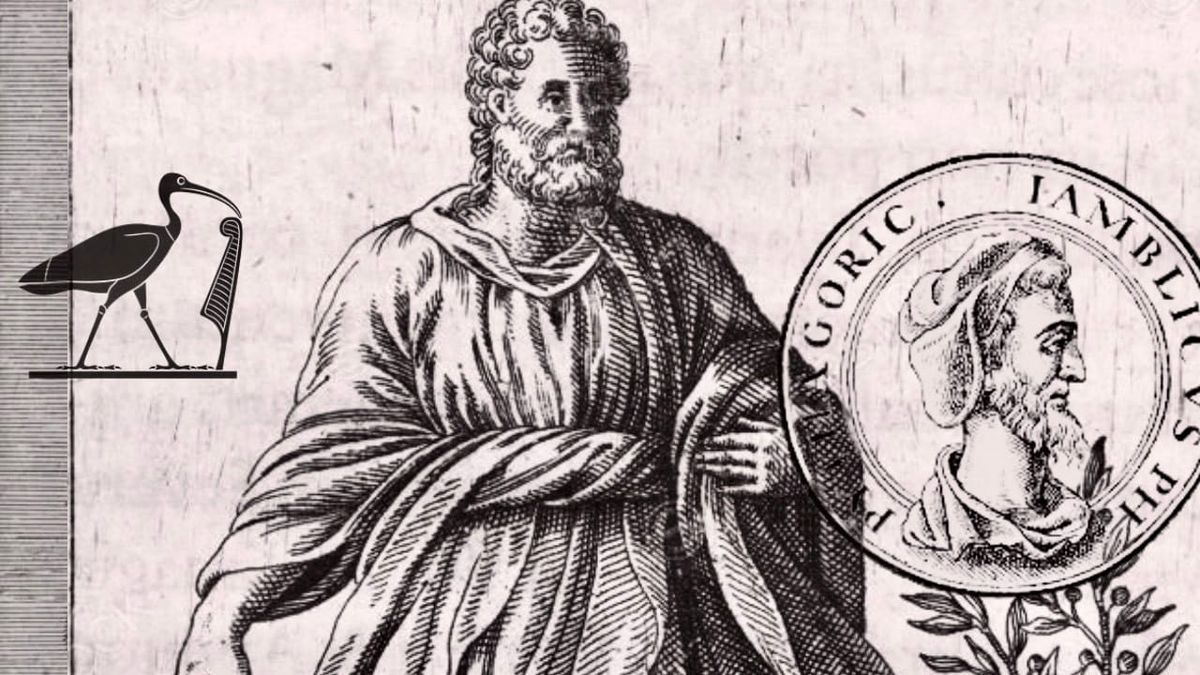
More than a decade after its appearance, John Milbank and Aaron Riches’s foreword to the second edition of Gregory Shaw’s Theurgy and the Soul: The Neoplatonism of Iamblichus (2014) remains a welcome contribution to the recovery of Platonism as a living religion. The authors take issue with the notion, still surprisingly prevalent among Christian theologians, that Christianity owes its appreciation of the body and the sacramental character of material things to the Hebrews, and its supposedly disembodied conception of the spiritual life to the Greeks. Drawing upon Plato’s Timaeus and the sacred traditions of antiquity, Iamblichus expounds a conception of the cosmos in which even the humblest material things may receive and communicate the powers of the gods. In theurgy, the philosopher participates in the divine activity by which the world itself is constituted and sustained.
Milbank and Riches write particularly well on the doctrine of participation in Iamblichus and Proclus. The greater the transcendence of a principle, the more intimate and universal is its presence to the things which depend upon it. The authors follow the fortunes of this doctrine in Christian theology through Dionysius the Areopagite, the Liber de Causis and Thomas Aquinas. Their observations on Augustine’s understanding of grace and liturgical action are well worth pondering, as is their comparison of Iamblichus’s vindication of sacred matter with John of Damascus’s defence of the holy images. The essay makes a persuasive case for the importance of the theurgical Platonists to any adequate historical understanding of Christian sacramental theology.
It is a pity that so fine an appreciation of Iamblichus should be accompanied by so unsatisfactory an account of Plotinus. Quite apart from his polemic against the Gnostics [Ennead II.9], one need only read his extraordinary treatise on contemplation [Ennead III.8] to appreciate how little justice is done to his cosmology by the imputation of quasi-Gnosticism. For Plotinus, Nature herself contemplates, and the forms she produces are the issue of her silent contemplation. His identification of matter with evil concerns matter in its privation of intelligible determination; the ensouled cosmos is a thing of beauty and an object of reverence. Nor is there any warrant for the assertion that his doctrine of the undescended soul dispenses with the necessity of divinizing ascent. The distinction between intellection and our apprehension of it is fundamental to his psychology, and the ascent culminates beyond Intellect itself. Indeed, when one recalls how Plotinus bids the soul await the presence of the One as the eye awaits the rising sun, the analogy with Pelagianism seems singularly ill-chosen.
The supposed gulf between Plotinus and Iamblichus appears narrower still in light of Benedetto Neola’s Drunk the Potion, No Whit Charmed: The Doctrine of Pure and Perfect Souls from Iamblichus to Damascius (2026). Neola argues that Iamblichus, in the very act of criticizing the Plotinian doctrine of the undescended soul, recast it in his doctrine of pure and perfect souls, whose providential descent into generation leaves their intellective activity unimpaired. His investigations into immaterial theurgy are of scarcely less interest, particularly as regards the contemplative life of souls which attain purity through spiritual discipline. The necessity of material rites varies with the condition of the soul; what is essential to theurgy is the priority of divine causation.
The suggestion, made by Shaw in 1995 and taken up here by Milbank and Riches, that the Church realized the Iamblichean religious programme more fully than the Platonists themselves calls for some historical qualification. Jeremy Swist’s Julian Augustus: Platonism, Myth, and the Refounding of Rome (2025) shows how thoroughly Julian’s conception of imperial government was informed by the Iamblichean ideal of the common participation of mankind in the providential activity of the gods. His death in 363, after a mere twenty months as sole emperor, cut short an undertaking whose ultimate prospects we are scarcely in a position to judge. Lea Niccolai, in Christianity, Philosophy, and Roman Power (2023), shows how Christian writers construed Julian’s downfall as providential confirmation of Christianity’s claims to the philosophical inheritance of antiquity. Historians of Platonism ought to be wary of perpetuating the assumptions of this older Christian historiography.
I remain indebted to Milbank and Riches for so sympathetic and intelligent a reading of Iamblichus. They have done much to restore him to his rightful place in the history of philosophy and religion. Christians will find much here to deepen their understanding of their own tradition, and Platonists have good reason to welcome the essay. I recommend it warmly and hope it will send many of its readers to Iamblichus himself.