Christmas
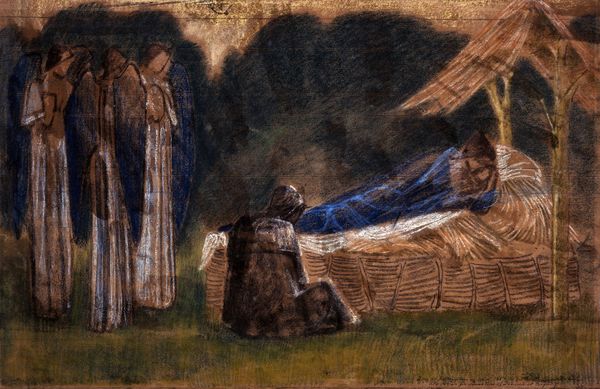
On the Poverty of Christmas
A Nativity sanitized of its social and political context is devoid of incarnation. Insofar as the phenomenon of Christmas is "Incarnate," it includes all the dung and flies that accompany our fleshly existence.
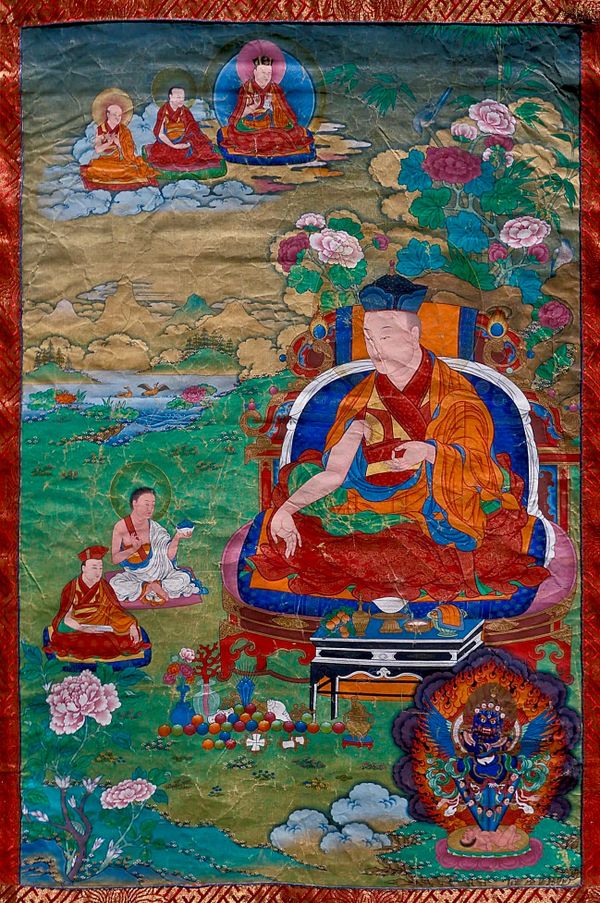
Tibetan Buddhism
Taken as a whole, Dakpo Tashi Namgyal’s teaching reveals a master who articulated Mahāmudrā not as a collection of exalted claims but as a rigorously tested path of recognition, diagnosis, and integration.
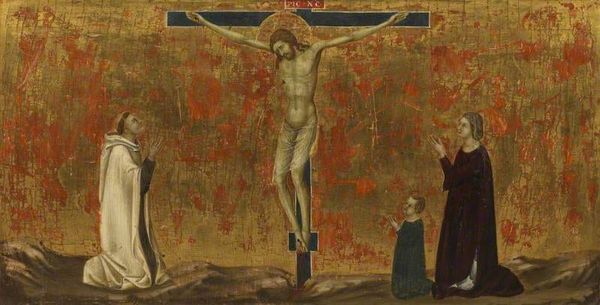
penal substitutionary atonement
The model of penal substitution occludes the event of the Crucifixion with abstract mechanism. But the phenomenon of Calvary offers and compels something more.
universalism
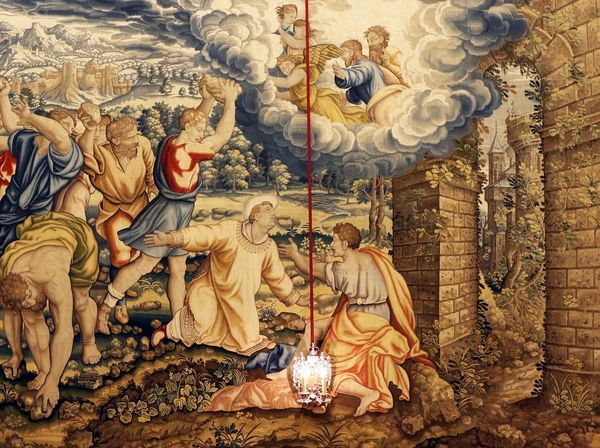
Martyrdom in a universalist paradigm entails no fear of eternal damnation and is a more credible "witness" before others.
Peter
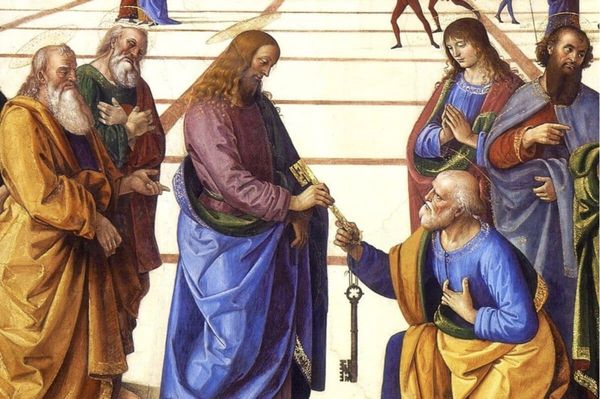
Peter's Confession is not merely the origin of ecclesial authority, but the beginning of a hard lesson about how divine insight can coexist with human misunderstanding—and how the Church is built on both.
An opinion piece in Vanity Fair wants to give us rubberneckers—or, you know, trainspotters, depending on which side of the tracks we may be standing (there can be only two, right?)—an apter set of historical precedents to talk about the M.O. of really existing Trumpism over against
incarnation
So long as we take our human experience seriously, anything that is thoroughly arbitrary cannot be genuinely salvific.
It gives me hope in the goodness of humanity to know that, unremarked by policymakers or the press or this digital panopticon in which we all voluntarily inform on ourselves, millions of men and women are, beyond a shadow of a doubt, quietly and durably happy. Every incentive structure leads
modernity
"A great master says that his breaking-through is nobler than his emanation, and this is true." ~Meister Eckhart, Sermon 87
Bulgakov
A brief reflection on Bulgakov and the irrevocability of everything.
Dispatches from the Eighth Clime
Metaphysics is not a science in the modern sense, but a mode of knowledge. Yet no conflict is conceivable between the two, nor there can be a symmetrical correlation between them, for their domains are so widely apart.
Insofar as no moment "in time" is lost on God (since God is not bound by time and moments to God do not, as to us, slip away), what happens to those moments wherein one "chooses" God if we are to believe that one could later
The rich will make temples for Śiva. What shall I, a poor man, do? My legs are pillars, the body the shrine, the head a cupola of gold. Listen, O lord of the meeting rivers, things standing shall fall, but the moving ever shall stay. —Basavaṇṇa (12th cent.), vācana 820.
At Calvary, Jesus was executed by the earthly powers of his day. "Atonement" cannot be sanitized of this political and historical reality.
In an age of techno-nationalist optimism, apocalypse is heresy. But only our eschatological horizon can reveal what is ultimately illusory.
Ash Wednesday, 2025 “All nations surrounded me; in the name of the LORD I cut them off!”—Psalm 118:10. It is not that the old school contrarian commentators require remarkable foresight to call the experiment in exceptionalism on its cruel game ahead of time—it is after hours, and
Upon arrival, I joined the parishioners in the confession line. I partook of the custom of bowing to my co-penitents just prior to approaching the confessor, which I am told is particular to Russian tradition. This soborny gesture attuned me to the sacrifice to come qua reparation of a shattered
Catholic and Orthodox Christians participate in Mircea Eliade's "eternal return" on the occasion of every eucharistic celebration.
In Indo-Tibetan alchemy, we have a single fundamental creative process and its associated energies which can be realised or accessed in a variety of ways by humans who acquire the requisite skills.
Thomas' stipulations are as much proof that Jesus had, in fact, died as they were proof of his resurrection.
Universalism is rooted in the Scriptures and the Fathers, and no authoritative statements in Tradition condemn the belief.
Universal salvation emerges from deep theological and historical roots, challenging the long-held consensus with a vision of hope grounded in the earliest teachings of Christ and the Church Fathers.