Song of the Rain, Song of Sophia
Khalil Gibran's celestial rain as a mirror for creation's rhythmic longing and the indwelling presence of Divine Wisdom.

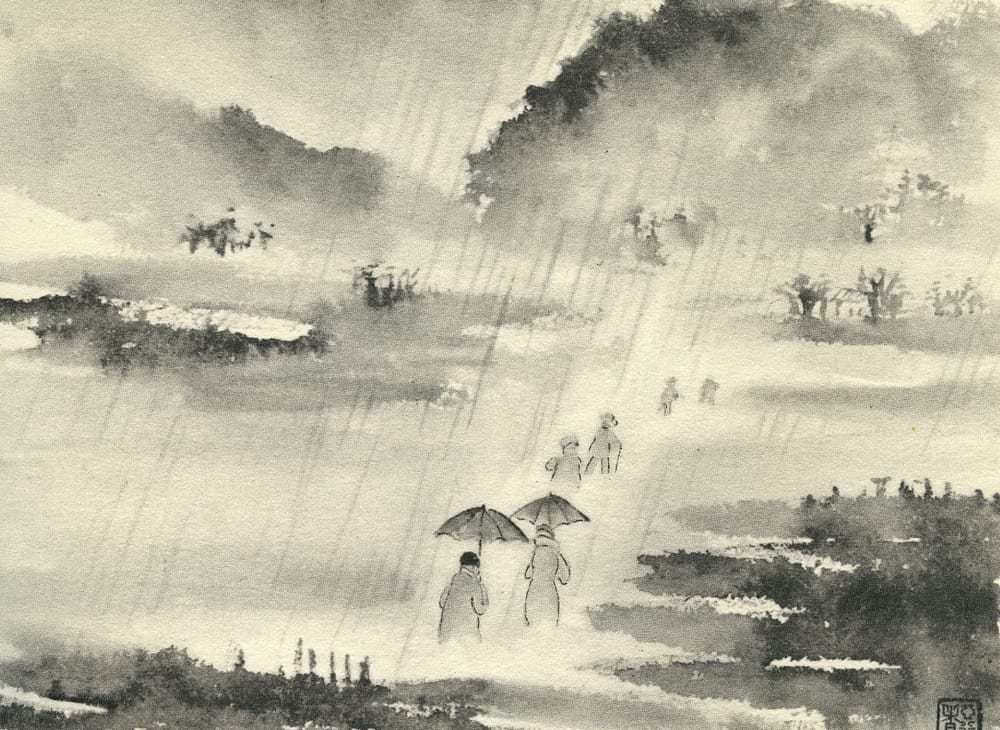
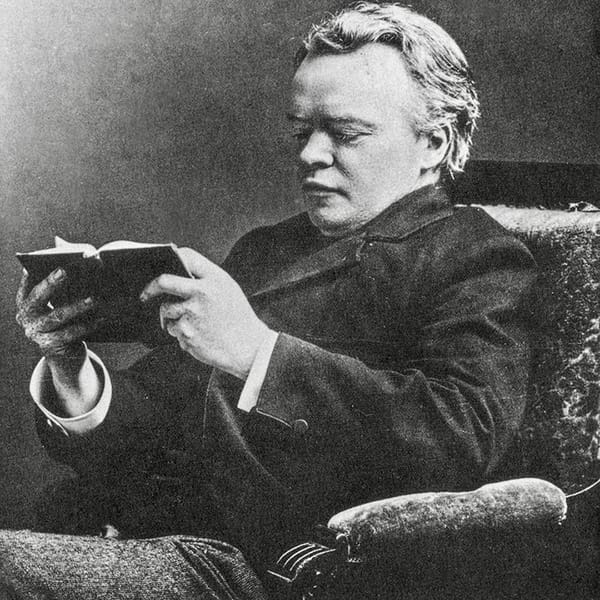
The following verses comprise the entirety of the poem Song of the Rain by Khalil Gibran, which appeared in his book Tears and Laughter. I don't know when this book was first published. My version claims a copyright in 1949 by The Philosophical Society. The introduction says Gibran wrote most of what's in this book in his late-teens and early-twenties (likely around the year 1900).
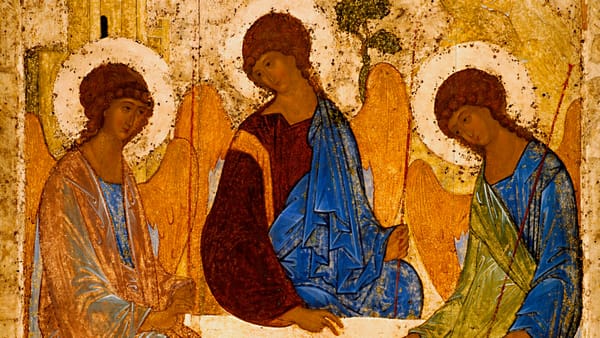
As I labor, slowly, over Sergei Bulgakov's reflections on Sophia in The Bride of the Lamb), Gibran's vision here of a celestial rain – one that relays mercy between the field and the cloud and that descends to embrace the flowers and the trees in need – reminds me of Her.
Song of the Rain
I am dotted silver threads dropped from heaven
By the gods. Nature then takes me, to adorn
Her fields and valleys.
I am beautiful pearls, plucked from the
Crown of Ishtar by the daughter of Dawn
To embellish the gardens.
When I cry the hills laugh;
When I humble myself the flowers rejoice;
When I bow, all things are elated.
The field and the cloud are lovers
And between them I am a messenger of mercy.
I quench the thirst of one;
I cure the ailment of the other.
The voice of thunder declares my arrival;
The rainbow announces my departure.
I am like earthly life, which begins at
The feet of the mad elements and ends
Under the upraised wings of death.
I emerge from the heard of the sea
Soar with the breeze. When I see a field in
Need, I descend and embrace the flowers and
The trees in a million little ways.
I touch gently at the windows with my
Soft fingers, and my announcement is a
Welcome song. All can hear, but only
The sensitive can understand.
The heat in the air gives birth to me,
But in turn I kill it,
As woman overcomes man with
The strength she takes from him.
I am the sigh of the sea;
The laughter of the field;
The tears of heaven.
So with love -
Sighs from the deep sea of affection;
Laughter from the colorful field of the spirit;
Tears from the endless heaven of memories.
"Only the sensitive can understand" is apt, I think, even if gnostic (such is Sophia herself). Anyways, I'm reminded of David Bentley Hart's eloquent distillation of the Sophianic visions of Vladimir Solovyov:
Solovyov's Sophia stands in the interval between God and world, as an emblem of the nuptial mystery of Christ's love for creation and creation's longing for the Logos. Sophia is the divine Wisdom as residing in the non-divine; she is the mirror of the Logos and the light of the Spirit, reflecting in the created order the rational coherence and transcendent beauty in which all things live, move, and have their being. She is also, therefore, the deep and pervasive Wisdom of the world who, even as that world languishes in bondage to sin, longs to be joined to her maker in an eternal embrace, and arrays herself in every palpable glory and ornament to prepare for his coming, and by her loveliness manifests her insatiable yearning.
And later, in that same passage:
She is thus indeed a kind of intelligence in the created order (analogous to the intelligence of the spiritual world of which Augustine speaks in The Confessions), and she is beauty, and order, and eros, but only insofar as she personifies the answer of creation to God’s call, the beloved’s response to the lover’s address; far from a kind of Romantic pantheism, what she represents is creation’s desire for God, its insufficiency in itself, its eternal vocation to be the vessel of his glory and the tabernacle of his indwelling presence. She is, in other words, a figure for the active longing of creation and for its accomplished rest; she is both passion and repose, ardent expectation and final peace. She is still God’s Wisdom, but as mirrored in the intricacy, life, unity, and splendor of created being, and in the unity and love the Church.